

Most Popular Products

|

 Send Inquiry
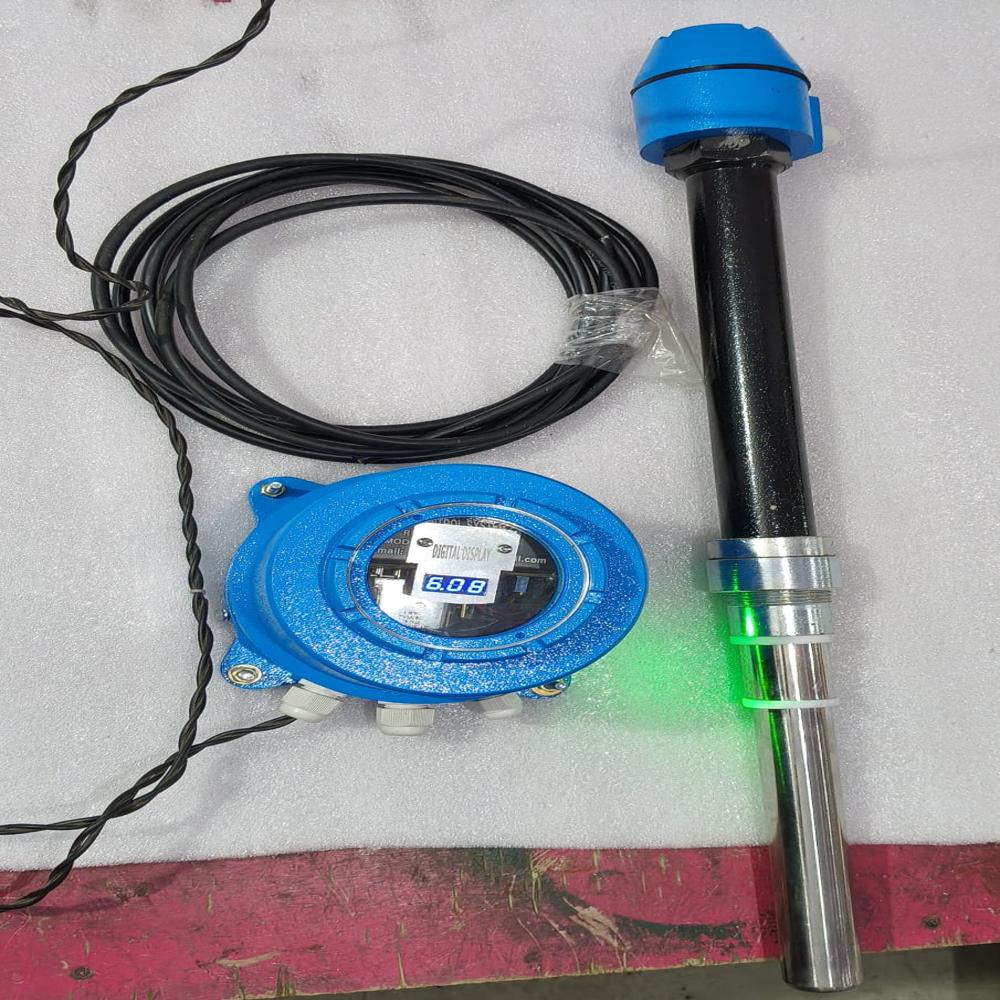
Sensing Probe
Price 15000.0 INR/ Piece
MOQ : 1 Piece
Sensing Probe Specification
- Temperature
- -10C to 60C
- Equipment Type
- Sensing Probe
- Product Type
- Sensing Probe
- Power Supply
- 24V DC / 230V AC
- Frequency
- 50/60 Hz
- Response Time
- 1 second
- Automation Grade
- Automatic
- Number of Specimens
- Single
- Interface Type
- 2-wire / 3-wire connection
- Features
- IP68 enclosure, corrosion resistant, easy installation
- Operating Voltage
- 24V DC / 230V AC
- Measuring Range
- Depends on probe type (e.g., conductivity, pH, etc.)
- Accuracy
- 2% of full scale (typical)
- Humidity
- 0-95% RH (Non-condensing)
- Mounting Type
- Threaded, Immersion
- Application
- Level/Conductivity/PH Measurement
- Display Type
- External, digital panel (optional)
- Resolution
- 0.01 units (typical, varies by model)
- Max Height
- Probe length customizable, up to 2 meters
- Usage
- Industrial/Water Treatment/Process Control
- Cable Length
- 5 m standard (customizable)
- Enclosure Material
- Polypropylene/ABS/SS316
- Calibration
- Factory calibrated, user adjustable
- Output Signal
- 4-20 mA / 0-10 V / Relay contacts
- Process Connection
- 1/2", 3/4", 1" BSP/NPT (customizable)
- Ingress Protection
- IP68
- Sensor Element
- Platinum/PTFE/Glass (based on application)
Sensing Probe Trade Information
- Minimum Order Quantity
- 1 Piece
- Main Domestic Market
- All India
About Sensing Probe
A sensing probe is a device that detects and converts a physical or chemical property into a readable signal, often an electrical one. It consists of a sensor that responds to a specific input like temperature, pressure, or light, and a "probe" which is the physical part that makes contact with the subject being measured. These probes are used in a wide range of applications, from industrial monitoring to consumer electronics.
How a sensing probe works
- Detection: The sensor, which is part of the probe, is designed to be responsive to a specific stimulus from the environment, such as a change in temperature, pressure, light, or the presence of a chemical.
- Transduction: After detecting the stimulus, the sensor converts this physical phenomenon into a different form, most commonly an electrical signal. For example, a piezoelectric sensor converts pressure into voltage, and a thermocouple converts temperature into a voltage.
- Signal output: The resulting electrical signal is then sent to a display, processor, or data logging system for interpretation.
Types and applications
- Industrial Monitoring: Probes are used to measure conditions in machinery, such as proximity probes for monitoring shaft vibration in rotating equipment or level sensors for measuring the height of materials in a tank.
- Scientific Research: They are used in laboratories for tasks like detecting chemical compounds. An example is a compact optical fiber probe used for monitoring heavy metals.
- Consumer Electronics: Smartphones use proximity sensors to detect when the device is held near the face to turn off the screen, and temperature probes are used in appliances.
- Medical Devices: In healthcare, probes are used for imaging and measurement, such as an endoscope with a sensor at its tip to view internal body parts.
Key characteristics
- Durability: Many probes are designed to be durable and reliable, especially those used in harsh industrial environments.
- Non-contact measurement: Some probes, like proximity probes, are designed to measure without physical contact.
- Compactness: Modern probes are often designed to be small and compact, making them suitable for portable and space-constrained applications.
Robust Build for Harsh Environments
Engineered with Polypropylene, ABS, or SS316, this sensing probe is corrosion-resistant and durable, making it ideal for varied industrial settings. Its IP68 ingress protection ensures reliable operation even in continuous immersion or high-humidity conditions.
Flexible Output and Integration
The probe supports a variety of output signals-4-20 mA, 0-10 V, or relay contacts. This versatility allows for easy incorporation into different control and monitoring systems, enhancing automation and process efficiency.
Customizable to Your Requirements
Featuring customizable cable lengths up to 2 meters and multiple process connection options (BSP/NPT threading), this probe fits seamlessly into diverse installations. Users can also select the appropriate sensor element-Platinum, PTFE, or Glass-based on their specific application needs.
FAQ's of Sensing Probe:
Q: How does the enclosure material affect the probe's performance?
A: The enclosure material-Polypropylene, ABS, or SS316-is selected based on the application's environment. Polypropylene and ABS are excellent for chemical resistance in less aggressive settings, while SS316 offers superior durability and corrosion resistance for harsh or high-temperature applications, ensuring stable and long-term use.Q: What types of measurements can this probe perform?
A: This sensing probe is suitable for level, conductivity, and pH measurements. The choice of sensor element (Platinum, PTFE, or Glass) depends on the specific parameter and the medium being measured, offering flexibility across various industrial and water treatment applications.Q: When should I consider customizing the probe's cable length or process connection?
A: Customizing the cable length or process connection is recommended when installation environments require longer reach, or when system compatibility with existing threaded ports (1/2", 3/4", 1" BSP/NPT) is necessary. Customization helps ensure a secure, leak-proof fit and optimal signal quality.Q: Where is the probe typically installed and used?
A: The probe is designed for threaded or immersion mounting, commonly installed in tanks, pipelines, and process vessels. It's widely used in industrial automation, water treatment plants, and process control systems where continuous level, pH, or conductivity measurements are required.Q: What is the process for calibrating and adjusting the probe?
A: Each probe is factory calibrated for immediate use. However, users can adjust calibration settings as needed via external controls or digital panel interfaces (optional), ensuring measurement accuracy aligns precisely with their specific process requirements.Q: How does the IP68 rating benefit users in real-world applications?
A: An IP68 rating ensures the probe is completely protected against dust and can withstand continuous immersion in water, making it highly reliable for submerged applications or areas prone to high humidity, such as wastewater treatment and industrial liquid process lines.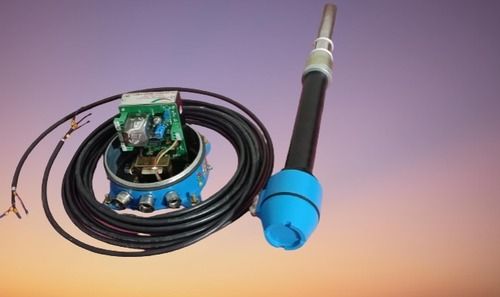
Tell us about your requirement

Price:
Quantity
Select Unit
- 50
- 100
- 200
- 250
- 500
- 1000+
Additional detail
Mobile number
Email

More Products in RF Level Category

RF Type ELectronic Controller
Price 2200 INR / Set
Minimum Order Quantity : 1 Set
Response Time : <100 ms
Automation Grade : Automatic
Resolution : 0.1
Interface Type : Wireless/RF Terminal Block

Quick Inquiry


Contact Details
Flow And Control System Pvt. Ltd.
GST : 06AACCF5431B1Z8
GST : 06AACCF5431B1Z8
PLOT NO. 11, LANE NO.2 16/5, Main Mathura Road, Karkhana Bagh,Faridabad - 121002, Haryana, India
Phone :08045805051
 Send Inquiry
 |
FLOW AND CONTROL SYSTEM PVT. LTD.
All Rights Reserved.(Terms of Use) Developed and Managed by Infocom Network Private Limited. |
